

Quick Facts:
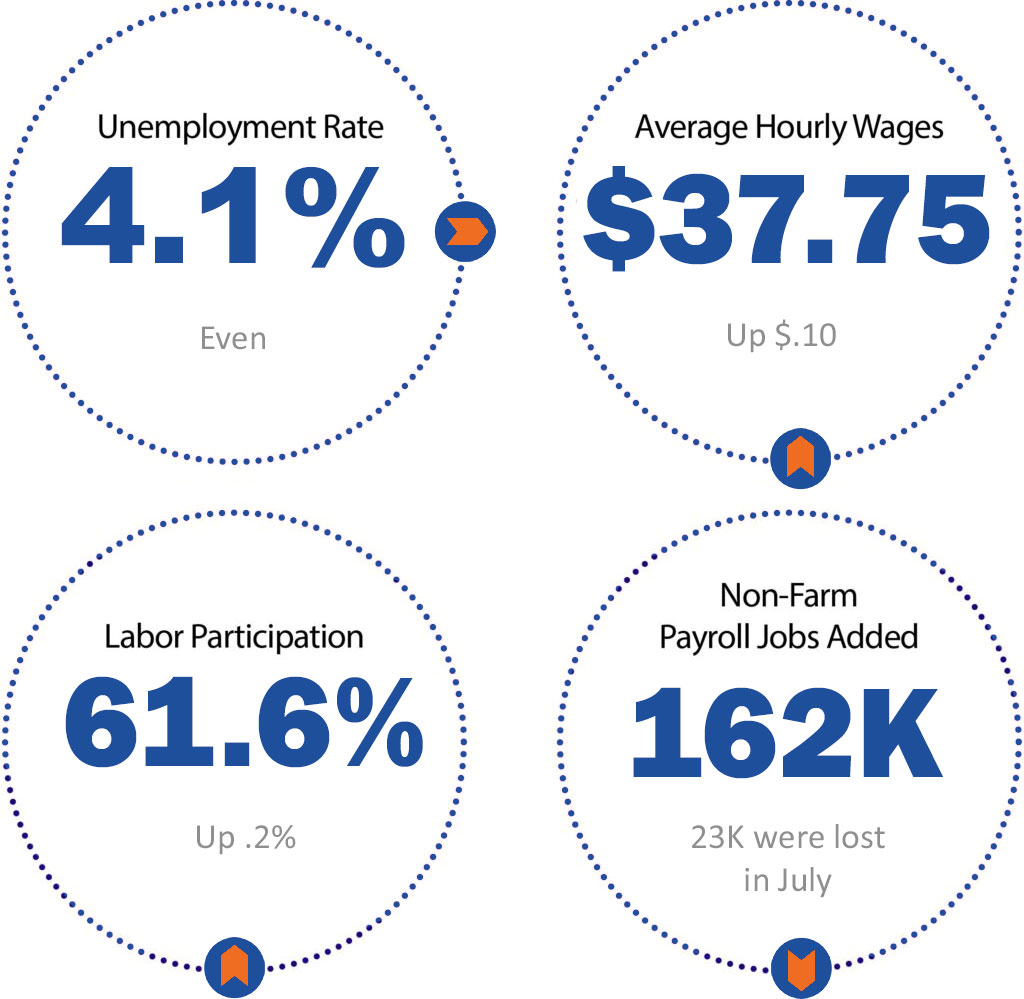
- Total nonfarm payroll increased by 162,000 in August,
and the unemployment rate was unchanged at 4.1 percent.
- Employment increased in food services and drinking places and in
local government education. The information industry lost jobs.
- Long-term unemployed (those jobless for 27 weeks or more) changed little at 1.9 million in
August. The long-term unemployed accounted for 27.0 percent of all unemployed people.
- The number of people employed part time for economic reasons decreased by 414,000
to 4.4 million in August.
Looking Forward:
- The U.S. economy added jobs at a brisk pace in August,
reversing a summer slowdown in hiring, while the
unemployment rate held steady. Nonfarm payrolls rose a
seasonally adjusted 162,000 for the month while the
unemployment rate, as expected, held steady at 4.1%, the Bureau of
Labor Statistics reported Friday. Economists surveyed by Dow Jones had
been looking for a payrolls increase of 53,000.
- The food services sector added 59,000 jobs, while public education gained 42,000
jobs. The healthcare sector, which has been responsible for much of this year’s job gains,
continued to grow, although at a slower pace, adding 13,000 jobs. In a sign of ongoing
challenges in white-collar employment, the information sector lost 23,000 positions.
- Ellen Zentner, chief economic strategist for Morgan Stanley Wealth Management, said that “An upside surprise in payrolls will likely ramp up concerns about a rate hike, but that outcome is in the hands of next week’s inflation numbers.” “If those come in cooler than expected, the Fed will likely feel comfortable discounting potential inflationary signals coming out of the labor market,” she added.
- So far this year, employers — companies, government agencies and nonprofits — have added an average of more than 80,000 jobs a month. That is up from a dismal monthly average of 9,700 last year. But job creation remains well below the 166,000 monthly jobs that were the norm in 2023 and 2024, let alone the 491,000 a month recorded during the 2021-2022 hiring boom that followed pandemic lockdowns.
Source:Source: U.S. Bureau of Labor Statistics – The Employment Situation – August 2026
