In this article, we will discuss:
- How working from home has impacted worker health and well-being.
- The ways in which our furry friends improve worker satisfaction while working from home.
- Tips for creating a pet-friendly home office that boost productivity.
- Ways businesses can involve their employees’ pets in fun and engaging activities.
Working from home has become more commonplace than ever before. According to the U.S. Bureau of Labor Statistics, since the COVID-19 pandemic, the number of remote workers increased from 17% before 2020 to 39% in 2021. This shift to remote work has fundamentally changed the professional landscape. Where a workday once involved a daily commute and a bustling office, workers have found that the boundaries between personal and professional life have blurred. While this change has brought flexibility, it has also brought up new challenges to employee well-being.
Remote work has a complex impact on the health and well-being of workers. For many, the elimination of a commute, increased autonomy, and the ability to be at home with their family have been significant boons. However, some unique stressors have become obvious: social isolation and the inability to “switch off.”
The loss of casual, daily social interaction with colleagues can lead to feelings of isolation. And, with the office literally steps away from the bedroom, the temptation to work longer hours is high, leading to more cases of employee burnout. This low-grade stress and lack of clear boundaries has made it difficult for employees to find the perfect work-life balance, impacting mental health and overall job satisfaction.
However, there is one benefit to working from home that has become more prevalent: our pets. These four-legged, furry, feathered, or scaled family members provide more than just companionship. In fact, they can increase satisfaction, reduce stress, and improve connection with other remote peers.
The Benefits of Pets in Your Home Office
Our furry friends are not just part of a video chat background; they are active contributors to the home office atmosphere. Studies have shown that the benefits of human-animal interactions are widespread, and those benefits are amplified when we work from home.
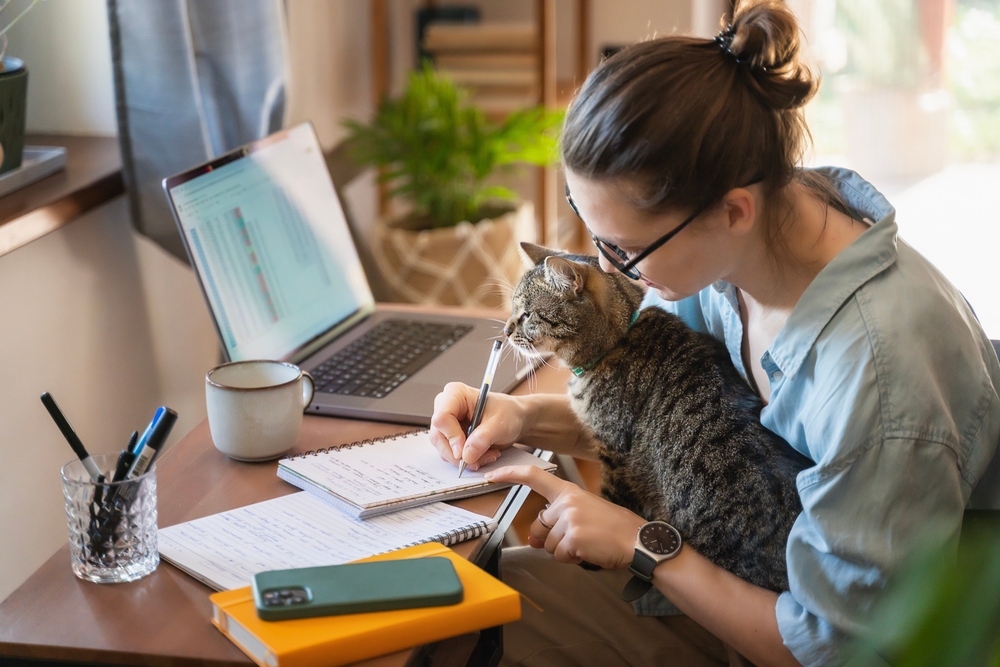
The most profound benefit of having pets in your home office is stress reduction. The simple act of petting a cat or dog has been shown to lower blood pressure and reduce the levels of the stress hormone cortisol. When a challenging email or difficult meeting raises your anxiety, reaching for your furry best friend can provide an immediate, calming reset. Our pets act as living, breathing stress balls, only much cuter and far more effective.
Pets also enforce much-needed micro-breaks. A dog waiting patiently at the door with their leash, or a cat that demands your attention by walking across your keyboard, forces you to stand up, move, and shift your focus, even if it is only for five minutes. These brief interruptions are crucial to breaking up the time workers spend staring at screens and reducing eye and cognitive fatigue. Since keeping your body moving throughout the day is necessary in any office setting where workers are at their desks for several hours at a time, a pet insisting on play and movement can make a big difference.
Anyone who has been on a video meeting recently has likely seen one of their coworkers’ pets. Dogs, cats, and other pets are fantastic natural icebreakers and relationship builders. A dog’s sudden cameo or a cat jumping up into their favorite sunny spot in the background offers a moment of connection with colleagues and clients. These brief, authentic interruptions add a touch of personality and warmth to professional interactions, strengthening team bonds while also reducing the formality of remote communication. By being their loving, sometimes interruptive selves, our pets remind us that we are all humans working together, from home, towards a common goal.
Creating a Pet-Friendly Home Office to Boost Productivity
A pet-friendly office is one that accounts for your pet’s presence and maximizes their benefits while minimizing distraction. There are a few things remote workers can do to optimize their space and invite their furry friends to be a part of their home office.
Designated Comfort Zones: Create a space in your office that gives your pet their own comfortable space near your desk. A cozy bed, their favorite crate, or a cat tree allows them to share their space with you without encouraging them to be in your way while you are working.
Scheduled Breaks: Do not wait for your pet to interrupt an important meeting or get in the way while you’re racing to finish a project. Build structured pet breaks into your day, perhaps during your lunch break or that dreaded mid-afternoon slump. Taking your dog on a fifteen-minute walk benefits you both—you get exercise, and they get their energy needs met, making them calmer so you can finish your day.
Noise Management: For pets that like to be involved by meowing, barking, or chirping while you work, consider keeping a basket of their favorite toys nearby during important meetings. If necessary, invest in a noise-canceling microphone to ensure professional audio quality.
Safety First: With remote work comes remote workstations and plenty of computer and monitor cables. Secure any dangling cords, keep common office supplies like staples or rubber bands out of your pets’ reach, and always make sure your trash can is covered to deter a curious sniffer.
How Employers Can Involve Pets in Remote Workplace Culture
Pets in remote workers’ home offices don’t benefit just the employee. Employers also can too. By involving employees and their pets in company culture, employers can boost company-wide morale and engagement and show their employees that they recognize and support their work-life reality. Here are some ways businesses can involve pets in their everyday operations.
Pet-Inclusive Benefits Packages: In our most recent blog, we discussed what benefits are truly important to today’s workforce. Many employers are embracing non-traditional benefits in their employee benefits packages. One of these is pet insurance. By providing employees with the ability to keep their furry family members healthy, an employer shows that they value their team’s entire life experience.
Wellness Initiatives: Beyond insurance, encouraging employees to participate in activities like “Walk Your Dog Wednesday” or “Pet Yoga” can promote physical activity and reduce stress, framing pet time as essential to employee’s health and well-being.
Pet Photo Contests and Calendars: Engaging employees and their pets by hosting photo contests like “Sleepiest Pet,” “Most Enthusiastic Furry Coworker,” or a pet costume contest can bring employees closer together. Use the winning photos to create a company calendar to provide fun, low-effort engagement.
Donations and Charities: Most pet-owning employees will always be excited to connect over a shared, meaningful cause. Organizing a virtual drive for a local animal shelter or rescue group reinforces the company’s commitment to community and the well-being of its employees’ extended furry family.
The Purr-fect Remote Working Partnership
As remote work continues to define the future of employment, the presence of pets is more than just a perk—it is a significant factor in employee retention, mental and physical wellness, and overall job satisfaction. Our furry friends provide essential emotional support, wellness breaks, and a bridge between our personal and professional lives. By embracing and supporting the role of pets in the work-from-home environment, both employees and their employers can create a more balanced, productive, and joyful working experience.
At J & J Staffing, we know that attracting and retaining the right people is a constant challenge. We specialize in finding professionals who bring both dedication and balance to the modern workplace. If you’re ready to build a high-performing team that thrives in a flexible, pet-friendly remote environment, contact us today.
Staffing Services In Greater Philadelphia
J & J Staffing Resources is a professional staffing agency that connects local businesses to job seekers throughout the Greater Philadelphia area, including Pennsylvania, New Jersey, and Delaware.
We bring over 45 years of expertise in office, industrial, technical, and professional staffing placements as well as payroll management, and offer a wide range of services for both employers and job seekers.
Need help? J & J Staffing has offices in Newark, Bridgeport, Woodbury, Cherry Hill, Ewing, Princeton, Langhorne, and Horsham. Visit your local J & J staffing center or get started below.