
Quick Facts:
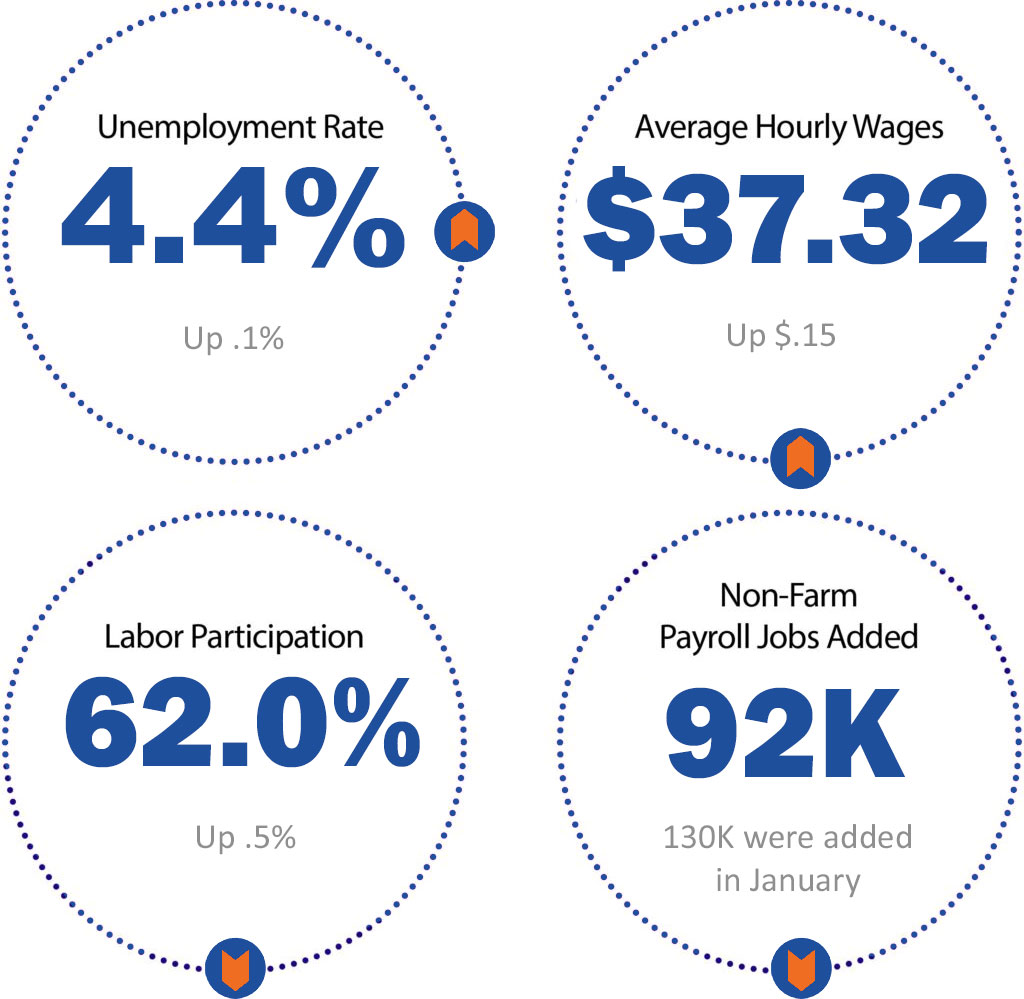
- Total nonfarm payroll employment edged down by 92,000 in February, and the unemployment rate changed little at 4.4 percent
- Employment in health care decreased, reflecting strike activity. Employment in information and federal government continued to trend down.
- The number of long-term unemployed (those jobless for 27 weeks or more) changed little at 1.9 million in February but is up from 1.5 million a year earlier.
- The number of people employed part time for economic reasons decreased by 477,000 to 4.4 million.
Looking Forward:
- Payrolls in the US dropped by 92,000 and the unemployment
rate ticked up to 4.4%, according to the latest official figures,
surprising analysts who had expected hiring to remain
stable. Nearly every sector shed jobs including healthcare, typically
a source of strength, which was hit by strikes last month.
- Employment in the federal government also continued to drop, shrinking by
10,000 last month. Since hitting a peak in October 2024, federal government employment
has dropped by 330,000, or 11%, the Labor Department said. It also said job gains in
December and January were lower than initially estimated.
- Transportation and warehousing saw a reduction of 11,000. Social assistance was one of the few sectors posting a gain, up 9,000. The weather-sensitive construction industry lost 11,000 after surging by 48,000 in January. Long-term unemployment also surged higher, with the average duration of unemployment at 25.7 weeks, the longest since December 2021.
- Inflation had been moderating, but a recent spike in gas prices following the fighting in the Middle East has raised questions about another jump. Elsewhere, economic growth has been solid, with reports this week showing that both the services and manufacturing sectors are expanding. Consumers have held up fairly well, though there are growing signs that most of the spending is being done by upper-income earners.
Source: U.S. Bureau of Labor Statistics – The Employment Situation – February 2026
