
Quick Facts:
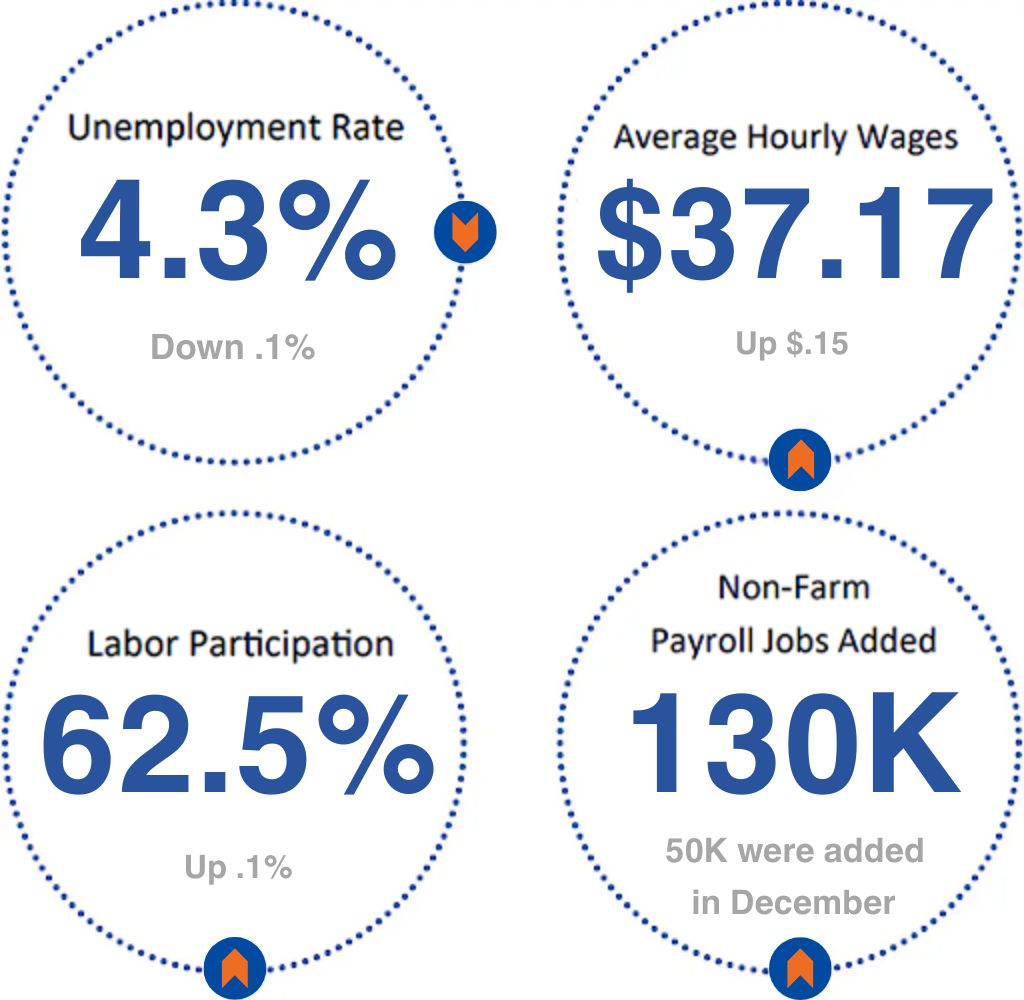
- Total nonfarm payroll employment rose by 130,000 in January, and the unemployment rate changed little at 4.3 percent.
- Job gains occurred in healthcare, social assistance, and construction, while federal government and financial activities lost jobs.
- The number of long-term unemployed (those jobless for 27 weeks or more) changed little in January at 1.8 million but is up by 386,000 from a year earlier.
- The number of people employed part time for economic reasons decreased by 453,000 to 4.9 million in January.
Looking Forward:
- U.S. job growth unexpectedly accelerated in January and the
unemployment rate fell to 4.3%, signs of labor market stability
that could give the Federal Reserve room to keep interest rates
unchanged for some time while policymakers monitor inflation.
- Healthcare employment increased 82,000, the most since July 2020,
spread across ambulatory healthcare services, hospitals, nursing and
residential care facilities. The job gains were well above the monthly average of 33,000 in
2025, leading some economists to conclude that January’s increase was a fluke. Social
assistance payrolls increased 42,000. Construction added 33,000 jobs, driven by the
hiring of nonresidential specialty trade contractors, attributed by some economists to
data centers needed to power artificial intelligence. Construction was virtually flat in
2025. Professional and business services payrolls rose 34,000.
- There were minor job gains in retail, utilities as well as leisure and hospitality sectors. The financial sector shed another 22,000 jobs. Job losses were recorded in transportation and warehousing, information technology and in mining and logging industries.
- Economists believe the economy needs to create 50,000 jobs per month or even less to keep up with growth in the working-age population. About 387,000 people entered the labor force last month. They were more than absorbed by a 528,000 jump in household employment, pushing the jobless rate down. Fewer people were working part-time for economic reasons and those experiencing long-term unemployment declined.
Source: U.S. Bureau of Labor Statistics – The Employment Situation – January 2026
